For LearnersFor EducatorsFor Organizations


VBI Academy
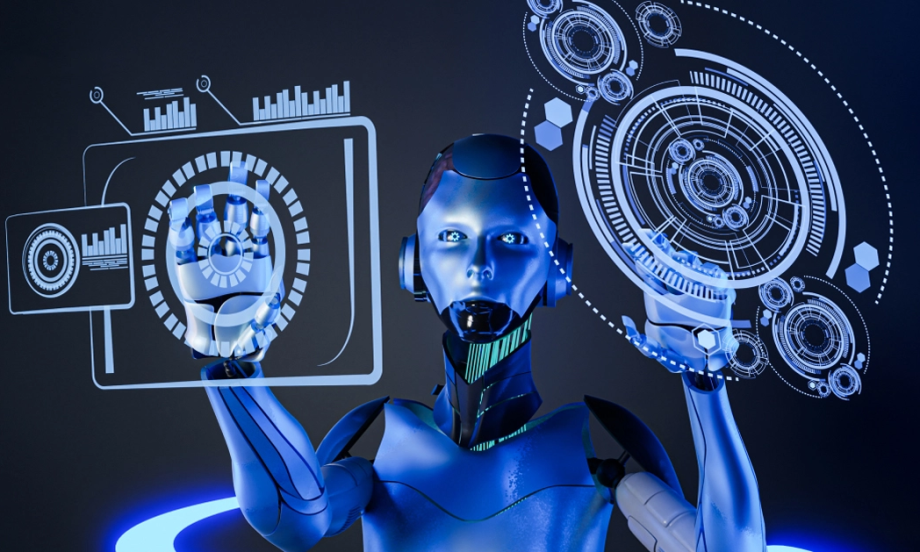
An AI agent is a software program that performs tasks on behalf of a user. It can automate processes, make decisions based on its perceptions and available data, and interact intelligently with its environment.
The roots of AI agents date back to the 1950s, when artificial intelligence emerged as an independent field of research. In 1956, during the famous Dartmouth College conference, John McCarthy coined the term “artificial intelligence,” marking the formal beginning of the discipline. In subsequent years, research focused on creating systems capable of performing more complex and autonomous behaviors, such as the “General Problem Solver” (GPS), designed to solve a wide range of problems using general strategies.
In the 1970s and 1980s, attention shifted toward “expert systems,” programs designed to emulate human expert decision-making in specific fields. One notable example is MYCIN, a system developed in the 1970s for diagnosing blood infections and recommending appropriate therapies. With the advent of machine learning and later deep learning, AI agents gained the ability to learn from experience and adapt to new situations.
An AI agent consists of architecture combined with software. The architecture generally includes the hardware that performs calculations, such as a computer or a robot. The algorithm is the program that guides the agent’s actions and runs on the architecture.
For example, AI agents are used in autonomous vehicles, which detect their surroundings, process collected data, and take actions. They receive instructions or general tasks from users and break them down into simpler activities. They can autonomously collect data and even interact with other agents or machine learning models.
If sufficient data is available, they implement the defined activities, remove completed tasks from their list, and evaluate progress toward the overall goal. During this process, they can generate new tasks to resolve issues or optimize results.
What if complex financial decisions, such as portfolio management, market analysis, and cryptocurrency price forecasting, were entirely entrusted to non-human entities?
AI crypto agents are the answer. These autonomous systems, powered by artificial intelligence, are designed to perform specific tasks within blockchain ecosystems, leveraging advanced technologies like Large Language Models (LLMs) and other machine learning models. They analyze real-time data, identify trends, formulate strategies, and make autonomous decisions. Human intervention remains crucial in the initial stages to define objectives and operational parameters that guide their actions.
A compelling aspect of AI crypto agents is the synergy between blockchain and artificial intelligence, opening new possibilities for ownership and economic value. Blockchain technology, which underpins cryptocurrencies like Bitcoin, was the first tool to transfer monetary value via a decentralized network. Similarly, blockchain now enables tracking the ownership of AI agents, allowing transparent distribution of generated profits. It also defines how the agent can be modified, promoting decentralized and participatory control.
A distinctive feature of this model is the tokens associated with AI crypto agents. Token holders have rights to a share of the profits and can influence the agent’s development. Through tokenized governance, users can allocate resources, implement new functionalities, or optimize existing ones. This democratizes innovation and creates a collaborative ecosystem where technological evolution and economic growth intertwine.
Integrating AI crypto agents into blockchain ecosystems is already transforming sectors like trading, decentralized wealth management, and predictive finance. Their ability to learn and adapt introduces new standards of efficiency and transparency in the crypto world. Looking ahead, the potential of AI crypto agents appears boundless, offering opportunities to transform not only the financial sector but also other aspects of digital life.

Differences Between Bots and AI Agents
AI crypto agents can be confused with bots, but the difference is substantial: bots are “deterministic,” while AI agents are “probabilistic.” Bots operate based on predefined rules set by developers. In contrast, AI crypto agents leverage machine learning models and artificial intelligence. They analyze vast amounts of data, identify patterns, make predictions, and make decisions based on probabilities. This allows them to adapt to complex contexts and act more strategically than bots.
In light of the above, AI agents emerge as advanced tools capable of automating complex processes, making autonomous decisions based on data analysis, and adapting to dynamic environments. They stand out from bots due to their probabilistic approach and learning capabilities.
In particular, the integration of blockchain and artificial intelligence offers fertile ground for developing new decentralized economic ecosystems. The ability to track the ownership of AI agents, distribute profits, and influence their development through token use creates a synergy between technological innovation and economic value. This enhances efficiency in sectors such as trading and decentralized management while also fostering active user participation in the evolution of these tools.
The substantial differences between bots and AI agents highlight the latter’s design for tackling more complex challenges. With their ability to analyze vast amounts of data, identify patterns, and act strategically, they are well-suited to dynamic and sophisticated contexts like the crypto world.
The future prospects of AI agents paint a highly promising picture. With ongoing technological advancements, it is plausible that AI agents will evolve to achieve functionalities closer to human cognition, further expanding their applications. Even today, they are indispensable tools for improving operational efficiency, reducing costs, and unlocking new opportunities in Web3.
However, several barriers to their adoption remain, including concerns about security and privacy. The fact that AI agents collect and analyze large volumes of personal data can raise compliance issues. Additionally, implementing AI agents in complex business processes requires significant time and investment, which not all companies can afford.
In summary, AI agents are not only a tangible manifestation of technological innovation but also a demonstration of how artificial intelligence can be leveraged to simplify complex tasks and create value, both in the present and in the future.

Sources:
Innovaformazione: https://innovaformazione.net/cosa-sono-ai-agent/
Young Platform Academy: https://academy.youngplatform.com/blockchain/agenti-ai-crypto-cosa-sono-come-funzionano/
SoluLab: https://www.solulab.com/ai-agents-in-crypto/?utm_source=chatgpt.com
Inno3: https://inno3.it/2025/01/08/agenti-ai-evoluzione-importanza-trend-e-rischi/